
Nordic Monitor
The Turkish Armed Forces (TSK) accused the Russian Air Force of violating Turkish airspace on July 5, 2016, eight months after the downing of a Russian jet, and warned the Russian defense attaché in Ankara that repeated infringements must be prevented.
According to secret military documents obtained by Nordic Monitor, a Russian military drone (unmanned aerial vehicle, UAV) had violated Turkish airspace for 23 minutes and 10 seconds on July 5, 2016. Russian military attaché Col. Aleksey Anisimov was summoned to the General Staff headquarters the following day.
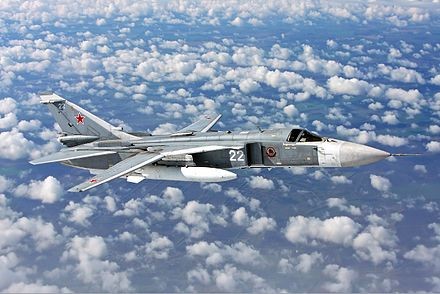
The Russian Air Force action came just seven months after Turkey’s shooting down of a Russian Sukhoi Su-24M fighter jet, on November 24, 2015. In accordance with the “rules of engagement” announced by the government of President Recep Tayyip Erdoğan, the Su-24M was reportedly struck by Turkish F-16 fighter jets near the Turkish border with Syria, close to where Turkey’s Hatay and Syria’s Latakia provinces meet in mountainous terrain. It was the first time that a NATO country and Moscow were involved in direct fire over the crisis in Syria.
Col. Anisimov and his delegation were met by the then-head of the Operations Center, Lt. Gen. Satı Bahadır Köse, and the then-head of Counterintelligence and Security, Brig. Gen. Atilla Gökesaoğlu, at the General Staff in Ankara on July 6, 2016, the minutes of the meeting revealed.
Following an abortive coup that many believe was a false flag operation, Köse was arrested and sentenced to life in prison on dubious terrorism charges, while Gökesaoğlu was forced into early retirement. In his defense statement during a hearing at the Ankara 17th High Criminal Court, Köse explained how two-thirds of all flag officers in the TSK had been branded as terrorists.
The two-page minutes of the meeting:
The documents revealed that Brig. Gen. Gökesaoğlu headed Turkish military members in the first part of the meeting, while Lt. Gen. Köse led the second half. Gökesaoğlu informed Col. Anisimov of the coordinates and course of the Russian military drone, claiming that the UAV, flying at an altitude of 5,000 feet, had violated Turkish airspace for 23 minutes and 10 seconds at a depth into Turkish territory of 9.7 miles and a length of 0.56 miles. The Turkish military staff that urgently contacted the Russian defense center was told that Russia had no record of any violation of Turkish airspace, the minutes noted.
According to the documents, the Russian military attaché expressed a readiness for cooperation and told his Turkish counterparts that the Russia-Turkey military-to-military direct line had not been in use for seven months and was not operational during the latest infringement. Russian military activities in Syria were shared with the operations center of the international coalition against the Islamic State in Iraq and Syria (ISIS) in line with a US-Russia agreement and could be sought from coalition headquarters if needed, he said.
The minutes indicate that the former Turkish generals dismissed the arguments put forward by the Russian defense attaché, saying that information-sharing with the US-led coalition would not justify violation of Turkish airspace and that those military acts “are not acceptable under any circumstances.” Calling on Russia to avoid such incidents that would cause a further deterioration of bilateral relations, the Turkish delegation underlined that the country’s position (rules of engagement) on such breaches had not changed and that the parties should put a direct line between the General staff operations centers into working order as soon as possible.
The map shows that Russian planes had harassed Turkish jets 143 times as of June 25, 2016, a dramatic increase from a year earlier:
On July 8, two days after the meeting in Ankara, the international military cooperation department of the Russian Defense Ministry informed the defense attaché’s office at the Turkish Embassy in Moscow via a note verbale that the Russian side had resumed work on the military-to-military communication line between the Russian national defense control center and the special emergency center of the Turkish General Staff. The Russian Defense Ministry also shared contact telephone numbers for interaction and asked the Turkish side to confirm its readiness to set in motion the communications line and the telephone number of the center.
The note vebale was circulated the same day to the Turkish General Staff by Defense Attaché Col. Hamdi Bozkurt.
The note verbale sent by the Russian Defense Ministry and its translation along with a letter from Defense Attaché Bozkurt:
The Turkish Air Forces and the General Staff operations center closely monitored the Russian Air Force’s expanding presence across Syria and detailed its operations in the country. According to another military intelligence document, dated June 29, 2016 and titled “Russian Aircraft in Syria,” Russia had deployed 23 fighter jets (11 SU-24, 4 SU-30, 4 SU-34 and 4 SU-35), two surveillance planes (IL-20 and AN-30), eight military drones (five Forpost and three Orian), 19 advanced military helicopters (6 MI-24, 3 MI-35, 3 MI-28, 3 MI-8/17 and 4 KA-52) in Syria. The secret document revealed that the number of Russian military aircraft in Syria had reached 52 as of July 2016.

Furthermore, the secret documents put forward how the Russian air activity in Syrian airspace was detected and tracked by the NATO radar system. Russian military aircraft flights over the region were reported daily by the Turkish Air Forces. The military intelligence figure showed that Russia had conducted 17,257 maneuvers in Syria between September 19, 2015 and July 10, 2016. In that regard, Russian fighter jets carried out 51 military missions in Syrian airspace on July 10, 2016. The Russian operations focused on the northwest of the country and were coordinated at Khmeimim Airbase located in Syria’s Latakia province.
On August 26, 2015 Moscow and Damascus had signed an agreement on the deployment of Russian warplanes and military personnel at the airbase. This deal led to the start of Russia’s military intervention in the country in September 2015.

Following the crisis in Turkish-Russian relations in November 2015, a rapprochement between the two countries strengthened in the aftermath of the failed coup. Bilateral ties subsequently entered a new period in which regional affairs, particularly the issue of Syria, topped the agenda. In parallel to a massive purge of Turkish military members who had served at NATO missions, the security and defense sectors, long ignored, have emerged as a major area for bilateral cooperation as well.