
Abdullah Bozkurt
Turkey’s National Intelligence Organization (MIT) appears to have staged a rocket attack on the palace of Turkish President Recep Tayyip Erdoğan three days after a failed coup in order to bolster the perception that the threat of a putschist attempt was still alive and to rally public support for the government.
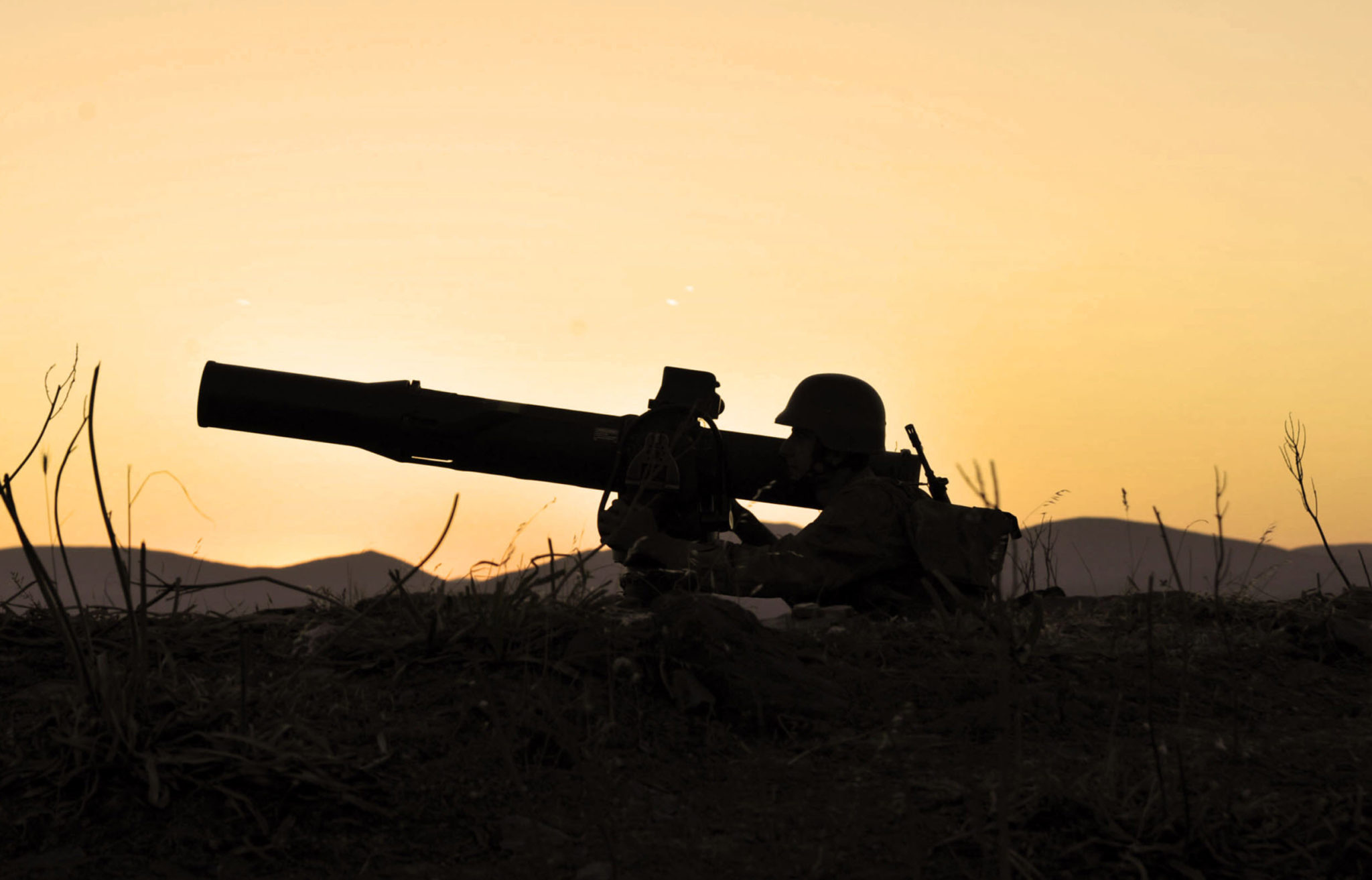
The incident took place on July 18, 2016 at 11:45 a.m. according to the police, when a military rocket was reported to have been fired at the fence next to Gate No. 3 of the presidential palace. The force of the blast bent the wrought iron bars of the fence, the report stated. The bomb squad was dispatched to the scene to examine the damage and collect fragments of the rocket from the palace garden. No casualties were reported.
A forensic examination of the rocket debris including “an electronic circuit board and motor parts” cited in a bomb squad report indicated that they were from a “US-made surface to air [XM41] series shoulder-fired … rocket.” The report was compiled on October 10, 2016 but submitted to the Ankara 4th High Criminal Court by Police Chief Ibrahim Özturk almost two years later, on May 2, 2018.
It turned out that the rockets were phased out by the Turkish military and the redundant munitions were turned over to MIT some 15 years ago according to Necip Erkul, a lieutenant who worked as an expert in military criminal laboratories before he was falsely charged with involvement in the failed coup.
The report reinforced the widely held belief that the limited mobilization on July 15, 2016 was nothing but a false flag operation plotted by MIT at the direction of Erdoğan, who wanted to consolidate his power under a newly instituted executive presidency and persecute his opponents. Erdoğan played the victim card in the aftermath of the abortive putsch, and his intelligence service appears to have orchestrated the rocket attack in broad daylight on the most secure location in Ankara, which was monitored by security cameras and police and intelligence officers round the clock.

MIT maintains a large stockpile of weapons, systems and ammunition that were phased out and deemed redundant by the Turkish Armed Forces (TSK). It also keeps a cache of weapons that were seized during security operations against the outlawed Kurdistan Workers’ Party (PKK) in the the country’s Southeast. It has also acquired a large stockpile of Russian weapons in operations in Syria and Iraq. With these weapons MIT can conduct clandestine operations, cover its tracks and mask activities that were secretly carried out.
Two days before the failed coup, MIT Undersecretary Hakan Fidan had unusually long meetings with Chief of General Staff Gen. Hulusi Akar and even visited him on the evening of July 15 at military headquarters right before the putschist attempt was launched. Most defendants in coup trials said they thought they were defending the military bases against terrorist attacks and denied allegations of plotting a coup against the government. Neither Fidan nor Akar testified in court proceedings, and they refused to appear before a parliamentary commission investigating the failed coup.
This was not the first time MIT had planned a false flag operation. In January 2019 a Turkish court confirmed the authenticity of a leaked audio clip in which top-ranking Turkish officials are heard discussing the possibility of an intervention in Syria in a false flag operation conducted by MİT. In the leaked recording then-Foreign Minister Ahmet Davutoğlu, then-Foreign Ministry Undersecretary Feridun Sinirlioğlu, MİT Undersecretary Fidan and then-Deputy Chief of General Staff Gen. Yaşar Güler are heard discussing military operations in Syria in Davutoğlu’s Foreign Ministry office on March 13, 2013.
Fidan says in the recording: “If needed, I would dispatch four men to Syria. [Then] I would have them fire eight mortar shells at the Turkish side and create an excuse for war.”
The judicial confirmation of the scandalous content was inadvertently revealed when the public prosecutor tried to pin the leak on a group critical of the government of President Erdogan as part of espionage charges. The statements in the leak, included in the indictment as allegations, were formally confirmed by the Ankara 4th High Criminal Court in a reasoned decision that was announced on Jan. 16, 2019.

“A top-secret meeting was held at the Foreign Ministry with the participation of the minister, his undersecretary, the MİT undersecretary and the deputy chief of general staff. The conversation in the meeting was illegally recorded for reasons of political and military espionage, and the recordings were posted online. The Ankara Chief Public Prosecutor’s Office launched this espionage case on March 27, 2014 in investigation file No. 2014/47602,” the court said in its ruling.
The investigation of the leak was turned into an indictment on June 6, 2016 under file No. E.2016/24769, and the same allegations were included in the indictment. The Ankara court announced its decision on February 17, 2017 but postponed the publication of its reasoned decision until January 2019.
In July 2015 German weekly magazine Focus published a report on an audio recording of a high-level security meeting at the Turkish Foreign Ministry concerning possible military action in Syria by means of a false flag operation that was recorded and then leaked by the US’s National Security Agency (NSA).
The Turkish government blamed the leak on the Gülen movement, a civic group that is highly critical of the Erdogan government, although the investigation failed to provide any evidence to that effect and found nobody from the group who might have been involved in the leak. The then-Ankara deputy public prosecutor, Veli Dalgalı, submitted a file to the Ankara Public Prosecutor’s Office on July 9, 2014, saying the perpetrators were unable to be identified with the available evidence.